
Why Your Swim Feels Harder Than It Should
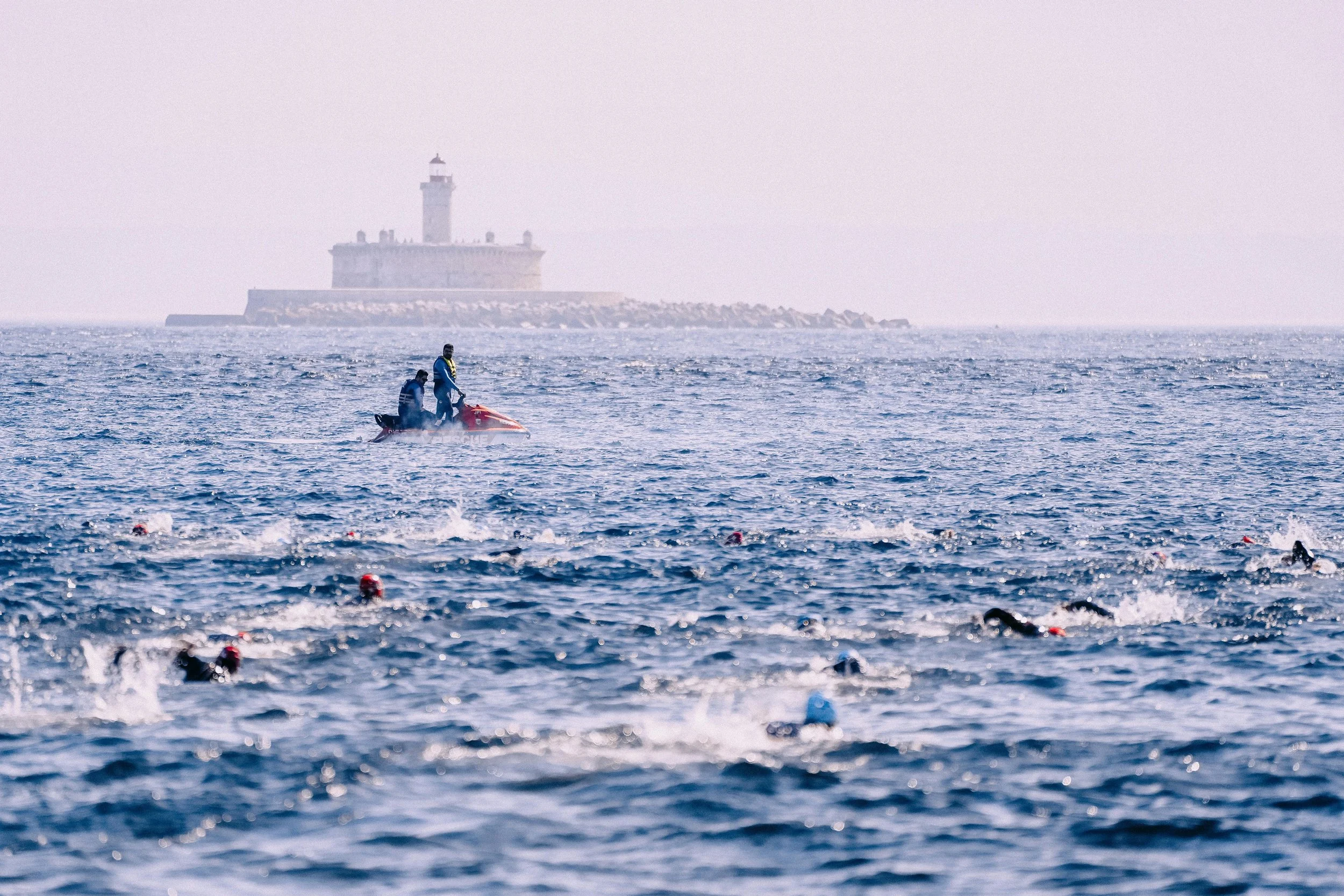
Ask any group of amateur triathletes which discipline worries them most before a race and the answer is almost always the same - the swim. Not the bike. Not the run. The swim. And in our experience working with athletes at IronLab, that worry is rarely about fitness. It is almost always about technique.
Swimming is the only discipline in triathlon where poor technique does not just slow you down - it drains you. You can run with a slightly inefficient stride and still finish. You can ride with a less than perfect position and still complete the course. But if your swimming technique is off, the water works against you long before you reach the bike transition.
Why Rotation Changes Everything
Body rotation is the foundation of everything else in freestyle swimming - and it is the element that amateur swimmers most consistently underestimate. Fixing it often unlocks several other improvements at the same time.
Rotation is not a style choice. It is a mechanical requirement. Without proper rotation along the long axis of the body, the arm cannot extend fully into the water, the pull is shortened, and the swimmer ends up using a fraction of the power available to them. More importantly, without rotation, every other element we are about to describe becomes physically difficult or impossible to do correctly.
Swimming technique works like a chain. Every element of the stroke is connected to the next, and when one link is weak, the pressure shifts onto the ones around it. What looks like a shoulder problem is often a rotation problem. What looks like a rotation problem often starts with the head position. The chain does not break at the weakest link by accident - it breaks there because everything upstream has been pulling on it.
This is something we see constantly at IronLab. An athlete arrives with one complaint and we find three connected causes. Fix only the symptom and the chain stays broken. Find the right link and several things often improve together.
The Head Mistake That Sinks Your Whole Stroke
Once rotation is addressed, the next most common technical problem we see is head position during breathing. When a swimmer lifts their head too high to take a breath, it seems like a small adjustment. In practice, it sets off a sequence of problems through the entire body.
When the head goes up, the hips drop. When the hips drop, drag increases dramatically. The body is no longer moving through the water - it is fighting it. The swimmer works harder, moves slower and arrives at T1 already depleted.
The correct position keeps the head as horizontal as possible during the breath - one goggle in the water, one out, rotating with the body rather than lifting against it. Between breaths, the head stays still and neutral, looking toward the bottom. This sounds simple. In practice, under fatigue and with the anxiety of open water around you, it is one of the hardest things to maintain consistently.
Why Your Shoulders Are Hurting
When we talk about a high elbow in swimming, we are talking about the recovery phase - the moment when the arm travels through the air before re-entering the water.
A low elbow recovery means the arm swings wide and low, rotating the shoulder joint through a range of motion it was not designed to handle repeatedly under fatigue. Over time this leads to impingement, inflammation and pain. We see it regularly in athletes who have been training for years without ever identifying the source of their discomfort.
A high elbow recovery keeps the elbow pointed upward as the arm moves forward, allowing the shoulder to travel through a natural, efficient path. The arm enters the water cleanly in front of the head rather than crossing over the centre line - which also helps maintain rotation and reduce drag.
The connection to rotation is direct. Without sufficient body rotation, a high elbow recovery becomes physically hard to achieve - which is why when one improves, the other often follows.
The Truth About Your Leg Kick
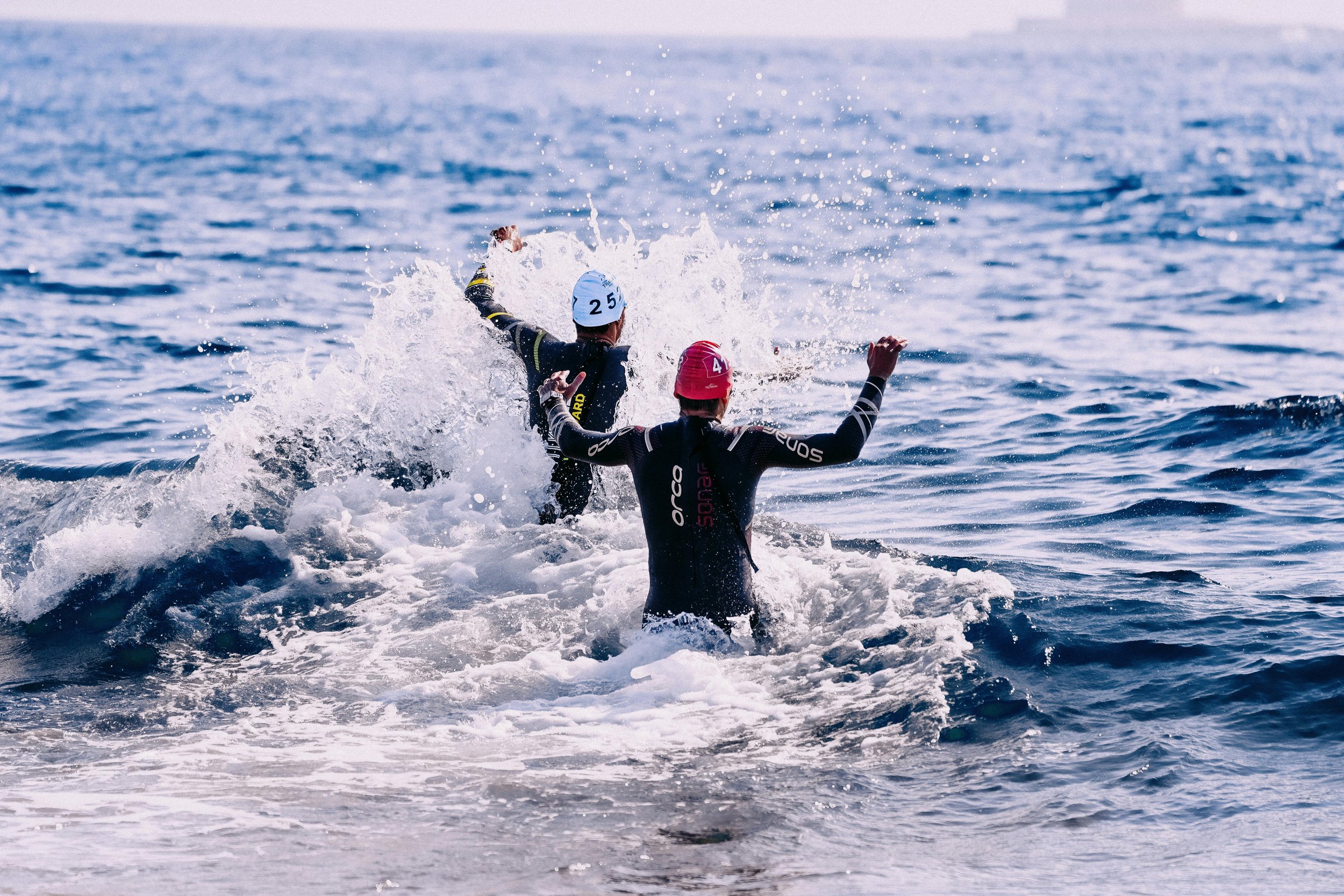
There is a widely repeated piece of advice in triathlon circles: do not kick. Save your legs for the bike and the run. Keep the kick minimal.
We agree - but only to a point, and the nuance matters more than most people realise.
The goal is not to eliminate the kick. The goal is to make it as efficient as possible and to adapt it to each athlete's individual technique. Because the legs do more than generate propulsion. They help maintain body position. They contribute to rotation. When a swimmer stops kicking entirely, the hips often drop, drag increases, and whatever energy was saved in the legs is immediately lost to the increased resistance of a compromised position.
The right to save your legs has to be earned. It means your body position must already be stable enough to stay horizontal without the kick doing corrective work. For many age-group triathletes, that position is not there yet - and cutting the kick while the technique is still developing simply makes everything harder.
The right approach is not less kick. It is the right kick for your body and your technique.
From Pool to Open Water
Everything described so far applies in a pool. Open water adds a layer of its own.
The most significant practical difference for triathletes is sighting - the need to briefly lift your eyes forward every few strokes to check your direction. In a pool you follow a black line. In a lake or the sea, there is no line. Without sighting, swimmers drift, add significant distance to their race and arrive at the bike already having spent far more energy than planned.
Sighting is a skill in itself and needs to be practiced deliberately. Done poorly it disrupts rhythm and wastes energy. Done well it becomes automatic and barely interrupts the stroke.
The anxiety that many triathletes feel about open water rarely comes from the water itself. It comes from unfamiliarity. The best way to address it is gradual, deliberate exposure - something we build into preparation for anyone targeting an open water race.
The Next Step
Swimming problems rarely exist in isolation. A tired shoulder, a sinking position, a kick that feels like it is working against you - these are almost always symptoms of something connected, not separate issues to be solved one at a time.
At IronLab, our individual swim sessions are built around identifying exactly where your technique is breaking down - and working on it from the right place, in the right order. It does not matter whether you are a complete beginner who has never trained the stroke seriously, or an experienced triathlete who has been racing for years with the same unresolved issue. We have worked with both, and the process is the same: find the problem, understand what is driving it, and fix it properly.
Swimming better is not about training harder. It is about knowing what to work on.
