
How a Bet Invented Ironman
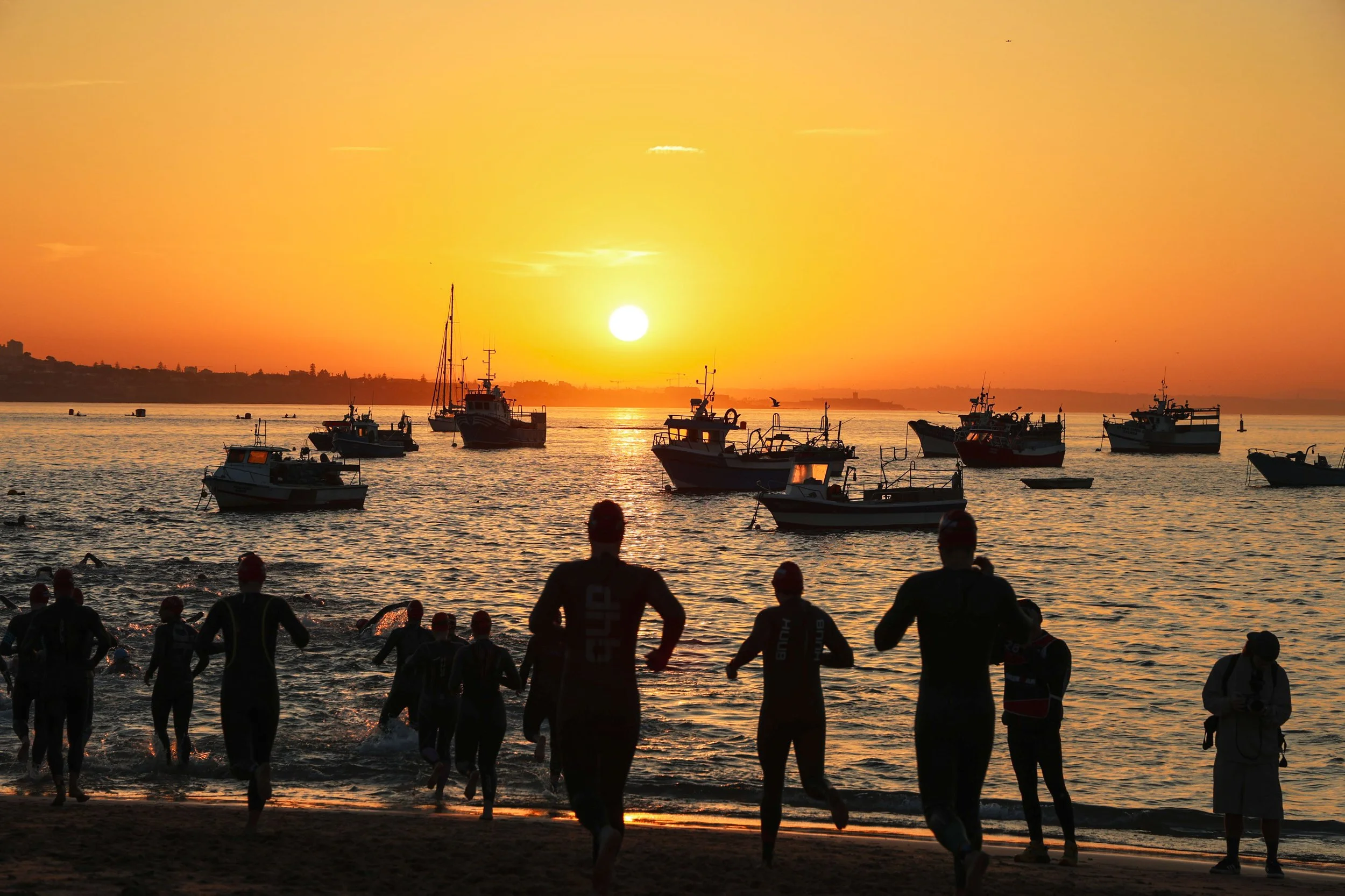
In today’s triathlon world, Ironman represents the ultimate test of endurance. It is long, demanding, and carries a certain weight that every athlete understands the moment they hear the name. But like many defining things in sport, it did not begin as something big or globally recognised. It started with a simple and almost casual question, who is the fittest?
In the late 1970s, endurance sports were already well established in the United States. Swimming races, cycling events, and running competitions each had their own communities, and each group strongly believed their athletes were the toughest. There was pride in every discipline, but no real way to compare them directly. Around that time, Judy and John Collins, a couple who had moved from California to Hawai‘i in 1975, were already involved in endurance events and early forms of triathlon. Their experience, combined with ongoing discussions among athletes and military personnel on the island of Oahu, slowly shaped an idea that would eventually redefine the sport.
Instead of continuing the debate without a clear answer, John Collins proposed something simple but concrete, to combine three existing races into one continuous event. There would be no breaks, no shortcuts, just one long effort from start to finish. The distances already existed: the Waikiki Roughwater Swim, the Around-Oahu Bike Race, and the Honolulu Marathon. When combined, they created a single challenge of 140.6 miles.
The idea sounded extreme, even unrealistic at first, but at its core it was very simple. Whoever finishes first wins, but more importantly, whoever finishes at all earns the title. As Collins famously said, “Whoever finishes, we’ll call the Iron Man.” That one sentence captured the entire philosophy of what Ironman would become.
The First Race
On February 18, 1978, that idea became reality. Fifteen athletes stood at the start line in Waikiki, not fully aware of what they were about to attempt. There was no big organisation behind the event, no sponsors, no large audience, and no media coverage. It was simply a small group of people willing to test their limits in a completely new way.
Before the race, each participant received a few sheets of paper with basic rules and a course description. On the last page, there was a handwritten message that would later become one of the most recognisable lines in endurance sport:
“Swim 2.4 miles! Bike 112 miles! Run 26.2 miles! Brag for the rest of your life.”
Twelve athletes finished that first race. What they created that day was not just another competition, but the foundation of something much bigger, a new definition of endurance and personal limits. At that moment, Ironman was still just a local challenge, but it carried an idea that would resonate far beyond Hawai‘i.
From Hawai‘i to the World
In the years that followed, Ironman did not just grow, it captured attention in a way few expected. A feature in Sports Illustrated brought global curiosity, generating interest from people around the world who wanted to test themselves in the same way. Soon after, television coverage introduced the race to a wider audience and gave it a new level of visibility.
One of the most defining moments came in the early 1980s, when Julie Moss collapsed just metres before the finish line during the World Championship. Despite being passed and losing the win, she refused to stop. She continued forward, crawling until she crossed the line. That moment, shown on national television, changed how people saw Ironman. It was no longer just about winning, it became about perseverance, resilience, and the willingness to continue when everything in your body tells you to stop.
At the same time, Ironman was also quietly setting important standards in sport. Women competed alongside men under the same conditions, with equal distances and rules, something that was still rare at the time. Athletes like Lyn Lemaire showed that this challenge belonged to anyone willing to take it on.
As the race grew, logistical challenges led to an important decision, in 1981, the event moved to Kona on the Big Island of Hawai‘i. The conditions there added a new level of difficulty. Heat, humidity, strong winds, and the long stretches of black lava terrain made the race even more demanding, but also more iconic. Kona quickly became the spiritual home of Ironman.
By the mid-1980s, the concept expanded beyond Hawai‘i, with races in New Zealand, Japan, and Canada. What started as a small local experiment was becoming a global movement. Ironman was no longer just a race, it was becoming a symbol of human endurance and possibility.

What Ironman Represents Today
Ironman started as a race, but today it has clearly grown into something much bigger than the event itself. For most athletes, it is not about standing on the podium or finishing first. Very few even enter the race with that expectation. The real goal is much more personal, to reach the finish line, to test limits, and to see how far one can go. In that sense, it is always a race against yourself.
But even the race itself is only a small part of the full story. What truly defines Ironman happens long before race day. The preparation requires time, structure, and consistency, and over time it changes a person completely. Training becomes part of everyday life, and what begins as a challenge slowly turns into a lifestyle.
Ironman becomes a way of living, an active, structured life that requires focus, discipline, and commitment over long periods. The goal is always far from the start, and reaching it demands both physical strength and mental resilience. Athletes learn to organise their time, adjust their habits, and stay consistent even when motivation drops. They accept that progress is slow, but meaningful.
In that sense, Ironman is not just about one day or one race. It is a long process of building, both physically and mentally. It is about showing up again and again, even when conditions are not perfect, and trusting that small steps will eventually lead to something bigger.
Because in endurance sports, big results never come from a single moment. They come from a long sequence of small, consistent efforts, one swim, one ride, one run. That is how Ironman started. And that is still how it is achieved today.
But more importantly, it shows what is possible when someone decides to try. Because no one starts ready. No one feels fully prepared at the beginning. The distance always looks too big, and the goal always feels far away. But step by step, session by session, things begin to change. What once seemed impossible becomes realistic. What felt far becomes reachable.
Ironman is not reserved for the fastest or the strongest. It belongs to those who are willing to commit, to stay consistent, and to keep moving forward even when it gets difficult.
At some point, the question is no longer “Can I do this?”
It becomes “Am I willing to try?”
And that is where every Ironman journey truly begins.
